


Table of Contents
Most people arrive in Dallas with a short list: see where Kennedy was shot, catch a Cowboys game, eat some barbecue. Then they get here and realize the city is bigger and stranger and more fun than the postcard version. You get a downtown arts district you can walk end to end, a deck park built over a freeway, live music pouring out of Deep Ellum on a Tuesday, and a whole second city, Fort Worth, sitting 30 miles west with its own cattle drive and honky-tonks.
I’ve lived in and around the Metroplex long enough to have given this tour dozens of times, to visitors, to new transplants, to in-laws in town for three days. The same pattern repeats. People plan around the famous stuff, then go home talking about a sunset from Reunion Tower, a plate of brisket they still think about, or an afternoon at White Rock Lake that cost them nothing.
This guide is the one I give those people. It covers the icons you should see, the local spots the big tourism sites skip, the handful of places where the hype runs ahead of the payoff, and the practical details nobody tells you, starting with the heat, which is real and will flatten you in July if you let it. Everything here is written for 2026, including the big one: Dallas-Arlington is a host for FIFA World Cup matches this summer, so if you are visiting in June or July, read the planning notes near the end first.
Here is how to spend your time, whatever kind of trip you are on.
How to use this guide
Dallas is spread out, so this guide is built around what you want, not just a ranked list. If you are short on time, use the quick picks below. If you have a specific trip in mind, jump to the section that fits: adults, date night, with kids, free and cheap, indoor in the heat, or a 1, 2, or 3-day plan.
Every listing has a short honest verdict and a “Good to know” box with 2026 prices, hours, and how to get there. Prices and hours change, so confirm the specifics on the official site before you go.
Short on time? The five you can’t skip:
- The Sixth Floor Museum at Dealey Plaza for the history that put Dallas on the map
- The Dallas Arts District, the cultural heart of downtown and home to the free Dallas Museum of Art
- Reunion Tower GeO-Deck for the 360-degree view that orients the whole city
- Klyde Warren Park and Deep Ellum for how Dallas actually lives and eats
- Fort Worth Stockyards, 40 minutes west, for the Western half of the “Dallas-Fort Worth” story
Now the full guide.
Things to do in downtown Dallas
Downtown is compact, walkable in parts, and where most first-time visitors should start. It holds the city’s defining history and its best skyline views within a few square miles.
The Sixth Floor Museum at Dealey Plaza
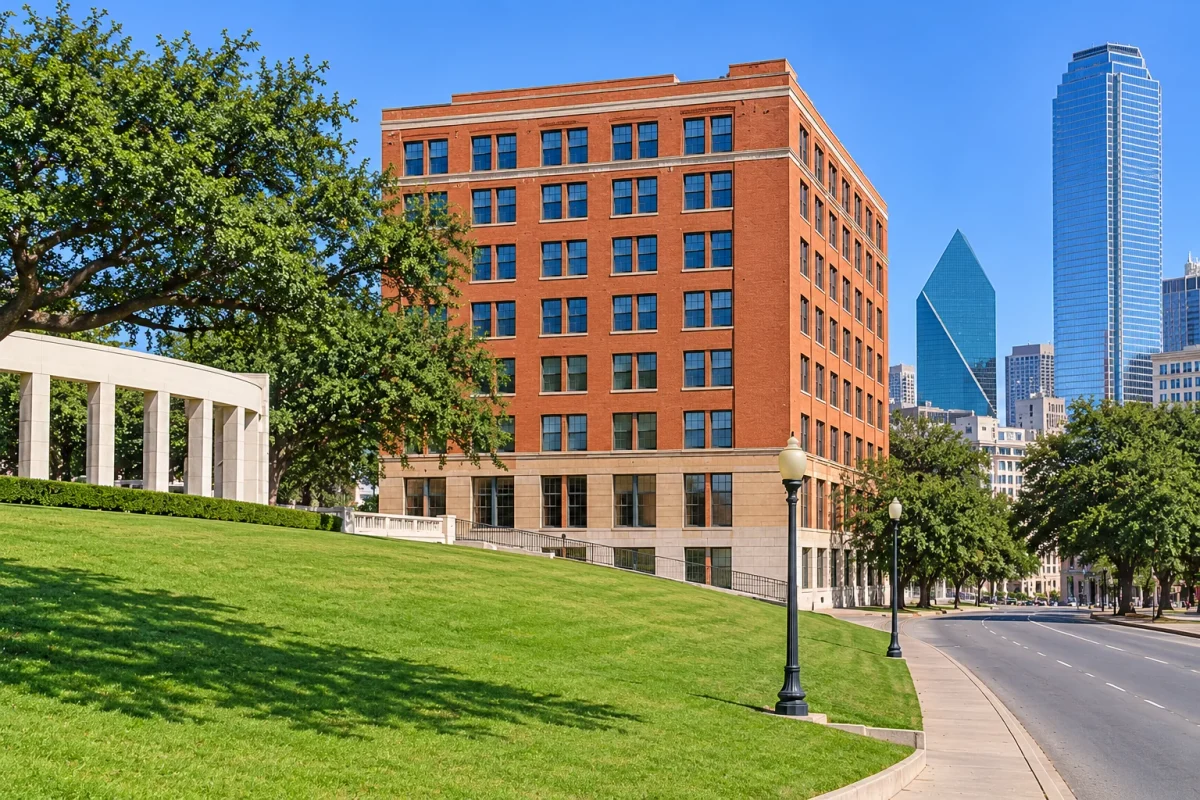
This is the one thing almost every visitor to Dallas sees, and it earns the status. The museum sits on the sixth floor of the former Texas School Book Depository, the building from which the shots that killed President John F. Kennedy were fired on November 22, 1963. The official investigation concluded the gunman was Lee Harvey Oswald. The exhibit walks you through that day, the investigations, and the decades of debate that followed, and the window corner is preserved behind glass exactly as it was found.
Honest verdict: it is powerful and somber, not a fun afternoon, and it is more compact than people expect. Give it 90 minutes. Afterward, walk out into Dealey Plaza itself, where two white X marks on Elm Street mark where the car was when the shots struck, and the Grassy Knoll rises on your right. Standing there is free and, for many people, more affecting than the exhibit.
Reunion Tower GeO-Deck
For the view that makes sense of a sprawling city, ride 470 feet up the Reunion Tower GeO-Deck. The ball-shaped tower is the most recognizable thing on the Dallas skyline, and its indoor and outdoor observation deck gives you a full 360-degree look, with telescopes, interactive screens, and a clear line of sight from downtown out to the stadiums in Arlington on a good day.
Go near sunset if you can. The city lights coming on over the flat Texas horizon is the best version of this.
Pioneer Plaza and the cattle drive
Pioneer Plaza holds one of the largest bronze monuments in the world: a sculpted cattle drive of 49 longhorn steers driven by three trail riders down a landscaped hillside. It is free, it is right downtown next to the convention center, and it is a genuinely striking nod to the Texas cattle trails that built the region. Ten minutes, no ticket, a good photo.
AT&T Discovery District
The AT&T Discovery District is downtown’s newest gathering spot, anchored by a 104-foot media wall that plays art and animations after dark. There is open lawn space, food and drink, free public programming, and on some evenings, yoga on the lawn. It costs nothing to walk through and it is the easiest place to feel downtown’s current energy, especially on a weekend night.
The Dallas Arts District: museums and culture
The Dallas Arts District is the cultural core of the city and, at around 20 blocks, one of the largest contiguous urban arts districts in the country. You can see world-class art, much of it free, within a short walk. If you do one neighborhood in daylight, make it this one.
Dallas Museum of Art
The Dallas Museum of Art is free to enter, and it is one of the best deals in the city. The collection spans ancient American art, European painting, and contemporary work across a large, airy building in the heart of the Arts District. You can drop in for 45 minutes or lose half a day. Only special exhibitions carry a charge.
Nasher Sculpture Center and the Crow Museum of Asian Art
Two more Arts District stops worth your time. The Nasher Sculpture Center pairs an indoor gallery with a quiet outdoor sculpture garden, a rare calm pocket downtown. The Crow Museum of Asian Art is free and holds jade, sculpture, and art from across Asia. Together with the DMA, they make the Arts District the highest concentration of culture in North Texas.
Klyde Warren Park
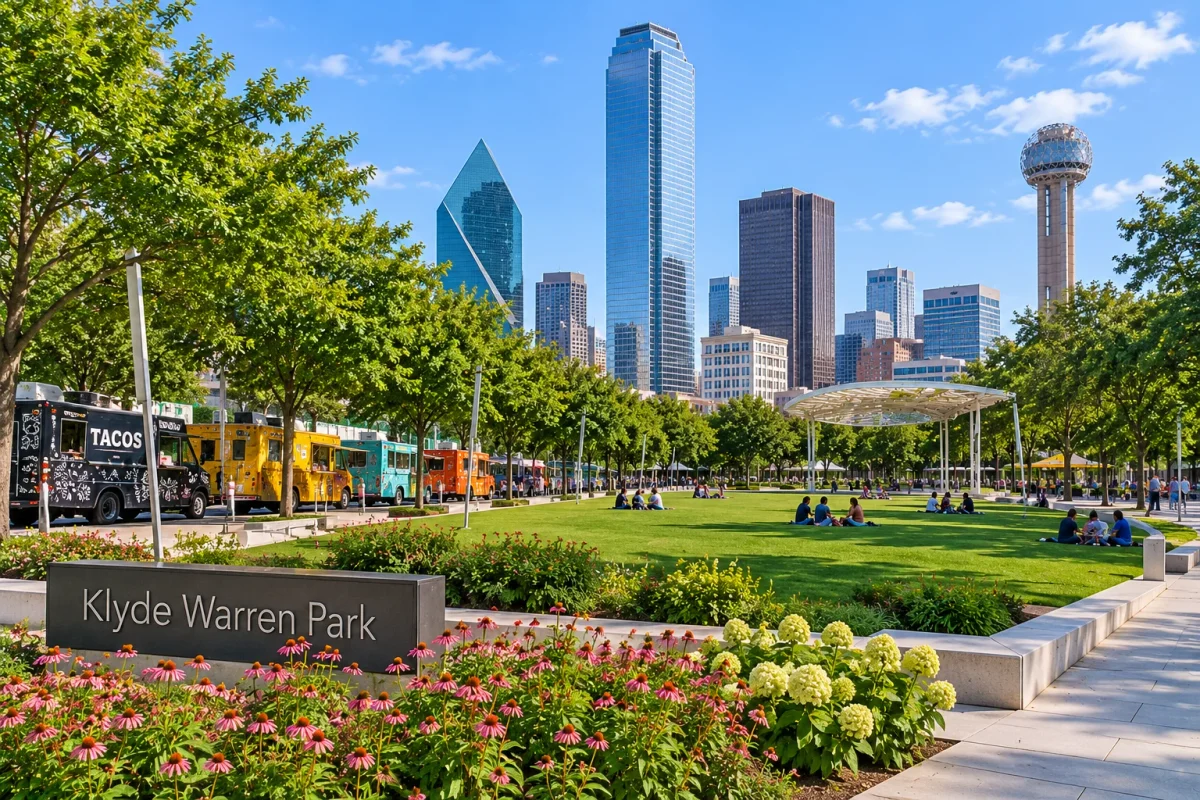
Klyde Warren Park is a five-acre deck park built on a bridge over the Woodall Rodgers Freeway, stitching the Arts District to Uptown. It is free, it has a rotating lineup of food trucks, a children’s area, free fitness classes, lawn games, and regular live events. Locals treat it as the city’s front porch. Grab lunch from a truck, find a shaded bench, and watch Dallas slow down for an hour.
Perot Museum of Nature and Science
The Perot Museum is the city’s big science-and-nature museum, built for curiosity at any age. Five floors cover dinosaurs, gems and minerals, the human body, and hands-on experiments, inside a striking cube of a building in Victory Park. It is a family favorite, but adults who like science leave just as happy.
More museums worth your time
Dallas has more museum depth than its reputation suggests. If the Arts District leaves you wanting more, these three are the ones locals send visitors to next.
George W. Bush Presidential Library and Museum
When people ask “what is there to do in Dallas besides JFK,” this is the most common answer. The George W. Bush Presidential Library and Museum sits on the Southern Methodist University campus and covers the 43rd president’s years, including a full-size replica of the Oval Office and a piece of steel from the World Trade Center. Whatever your politics, it is a well-made museum, and the grounds are pleasant.
Dallas Holocaust and Human Rights Museum
This museum pairs the history of the Holocaust with a broader look at human and civil rights, and it does it with real care. One standout is an interactive exhibit where you can ask a question and a recorded Holocaust survivor answers, built from hours of filmed testimony. It is moving and age-appropriate for older kids and up.
Dallas World Aquarium
The Dallas World Aquarium is more than fish: it is a multi-level walk-through rainforest with sloths, monkeys, birds, and marsupials, plus the aquarium tanks below. It is compact and popular, which means it gets crowded, so go early. Kids love it; adults should know it is smaller than the ticket price suggests.
Parks, gardens, and the outdoors
Despite the heat, outdoor life is a real part of Dallas, especially spring and fall. These are the green spaces locals actually use.
Dallas Arboretum and Botanical Garden
The Dallas Arboretum is 66 acres of gardens on the shore of White Rock Lake, and it is one of the highest-rated attractions in the whole city. It runs big seasonal shows: a pumpkin village in autumn, millions of blooms in spring, and holiday lights in winter. Come in the morning before the heat, and time your visit to a season if you can.
White Rock Lake
White Rock Lake is the city’s outdoor living room: a large urban lake ringed by about a nine-mile loop of trail. with a dog park, bird watching, picnic spots, and a scenic loop along Lawther Drive. It is free, it is where Dallas runs and cycles and walks dogs, and an easy slow drive or walk here is one of the most local things you can do. Sunset over the water with the skyline behind it is a quiet highlight.
Katy Trail
The Katy Trail is a 3.5-mile landscaped path on an old rail line, running from near downtown up through Uptown and Knox-Henderson. Locals use it to run, bike, and walk between neighborhoods, and the classic move is a trail walk followed by lunch or a drink in the Knox-Henderson area. It is free, shaded in parts, and the best way to see Uptown on foot.
Cedar Ridge Preserve
For something wilder, Cedar Ridge Preserve on the southwest edge of the city gives you about miles of hiking trails through hill-country terrain, maintained with Audubon, free to enter, and good for birding. It is cooler under the tree cover and a genuine escape without leaving Dallas.
The neighborhoods locals actually love
Ask a Dallas local what to do and half the answers are neighborhoods. This is where you find the real city, and it directly answers the most common local complaint: that recommendations are always just malls, chain restaurants, and bars.
Deep Ellum

Deep Ellum is the live-music and street-art heart of Dallas, a walkable grid of venues, murals, bars, tattoo shops, and some of the best food in the city, just east of downtown. It has deep roots in blues and jazz history and now runs the gamut from dive bars to serious restaurants. Come in the evening, walk the murals, catch a show, and eat well. It is the answer to “where is the nightlife.”
Bishop Arts District
Bishop Arts in Oak Cliff is the walkable, independent-minded neighborhood: dozens of locally owned shops, restaurants, bars, and galleries in a few compact blocks. It is less about big attractions and more about an easy afternoon or evening of wandering, eating, and browsing. A strong date-day or slow-morning pick.
Trinity Groves and the bridge
Just across the Margaret Hunt Hill Bridge, the architect-designed white bridge that has become a skyline symbol, Trinity Groves is a cluster of restaurants and an ArtPark that makes a good stop paired with skyline photos from the Trinity side.
Knox-Henderson and Lower Greenville
Two more neighborhoods locals name for a relaxed night out: Knox-Henderson for upscale shopping and dining at the top of the Katy Trail, and Lower Greenville for a dense, lower-key strip of bars and restaurants. Neither is a “tourist attraction,” which is exactly the point.
Dallas barbecue: the honest version
Barbecue is a real reason to visit Dallas, and the city has a genuine local debate about which is worth the line. The two names you will hear most are Terry Black’s in Deep Ellum and Pecan Lodge, also in Deep Ellum. Terry Black’s gets called overhyped by some locals, and defended just as hard by others, who will tell you they do not care what anyone says, the brisket is worth it. Pecan Lodge built its reputation on long lines and a cult following.
Honest take: both are good, both get busy, and the “best” is personal. Go early to beat the line, order brisket and a rib, and do not over-order, Texas portions are large. If the wait at one is brutal, the other is a short walk away. Either beats the chain barbecue most visitors settle for.
Things to do in Dallas with kids
Dallas is an easy family city, with several attractions built around curious kids. Here are the ones that consistently work, with the practical notes parents actually need.
- Dallas Zoo is the largest zoo in Texas, home to more than 2,000 animals, with the Giants of the Savanna habitat as its headline. Adult admission is around $25, kids about $20, under 2 free. It is in South Dallas, reachable by DART. Go early before the heat peaks.
- Perot Museum of Nature and Science (see above) is the rainy-day and hot-day winner: five floors of hands-on science.
- Dallas World Aquarium (see above) packs a rainforest and aquarium into one indoor walk, good for younger kids.
- Medieval Times in the Dallas serves dinner with a jousting tournament, a reliable crowd-pleaser for families and groups.
- Main Event and similar entertainment centers give you bowling, arcade, and laser tag under one roof when you need to burn off energy.
- In summer, the region’s water parks (Hurricane Harbor in Arlington, plus Great Wolf Lodge and the Gaylord Texan’s pools in Grapevine) are how locals survive July with kids.
Fun things to do in Dallas for adults
Dallas after the museums close is built for adults, with a nightlife, dining, and experience scene that goes well beyond cowboy bars. If you are visiting without kids or planning a group trip, here is where to point your evening.
- Deep Ellum is the anchor: live music most nights, from House of Blues to small clubs, plus the city’s best bar-and-restaurant density.
- Rooftop bars and the Reunion Tower view give you skyline drinks; pair a sunset GeO-Deck visit with a rooftop afterward.
- Wine tastings and brewery taprooms have grown fast; Deep Ellum and the Design District hold several worth an afternoon.
- Hands-on classes are a rising favorite for group trips and celebrations: candle-making, cooking, and craft classes run across the city and make a better story than another bar.
- Competitive socializing is everywhere: Puttery for upscale mini-golf and cocktails, Andretti Indoor Karting and K1 Speed for go-karts, Cidercade for a wall of arcade games with one admission, and Dave & Buster’s, which started in Dallas.
- Immersive art like the Sweet Tooth Hotel gives you a photogenic, grown-up alternative to a gallery.
Date night ideas in Dallas
The best Dallas dates skip the generic dinner-and-a-bar formula, which is exactly what locals say they are tired of. A few that reliably land:
- Sunset at the Reunion Tower GeO-Deck, then dinner in the Arts District or Uptown.
- A walk through Bishop Arts, browsing shops and splitting small plates.
- An evening of live music in Deep Ellum.
- Klyde Warren Park for a food-truck picnic and a free evening event.
- Shakespeare in the Park or an outdoor show in warmer months (Shakespeare Dallas runs a summer-fall season from around $20).
- A slow loop around White Rock Lake at golden hour.
Things to do in Dallas that don’t involve drinking
One of the most common local asks is for fun that is not centered on bars, and Dallas delivers if you know where to look. Alcohol-free picks that still make a full day or night:
- Arcades and games: Cidercade (you can go just for the games), Free Play vintage arcades, the National Videogame Museum in nearby Frisco.
- Active: Katy Trail, rock climbing gyms, Go Ape zip-lining in the area, kayaking at White Rock Lake.
- Culture: any of the Arts District museums, a show at the Winspear Opera House or Meyerson Symphony Center.
- Views and air: the Reunion Tower GeO-Deck, Klyde Warren Park, the Arboretum.
- Go-karts and mini-golf: K1 Speed, Andretti, Puttery (you can skip the bar).
Catch a game
Dallas-Fort Worth is one of the great American sports regions, and catching a game is one of the most fun things to do here. The Metroplex fields a full set of pro teams across close venues:
- Dallas Cowboys (NFL) play at AT&T Stadium in Arlington, a spectacle of a stadium worth a tour even on a non-game day.
- Texas Rangers (MLB) play at Globe Life Field in Arlington, which has a retractable roof, so summer games stay cool.
- Dallas Mavericks (NBA) and Dallas Stars (NHL) share the American Airlines Center downtown.
- FC Dallas (soccer) play at Toyota Stadium in Frisco, and the Dallas Wings (WNBA) play at College Park Center in Arlington, moving to the American Airlines Center in downtown Dallas for the 2027 season.
If your dates line up with a Rangers home game, buy a cheap seat and go; the roof and air conditioning make it the easiest summer evening in the Metroplex.
Beyond Dallas: the rest of the Metroplex
The “Dallas-Fort Worth” name is a promise, and the rest of the Metroplex is close enough that skipping it would be a mistake. These four day trips are all within about 45 minutes of downtown Dallas.
Fort Worth

Fort Worth is the Western half of the story, and the Stockyards National Historic District is the reason to go. You get a twice-daily cattle drive of Texas longhorns down the brick street, Billy Bob’s Texas (billed as the world’s largest honky-tonk), rodeos, and Western shops. Fort Worth also holds two of the best art museums in the country, the Kimbell Art Museum and the Amon Carter Museum of American Art, both free to enter for the permanent collections. Dallas plus Fort Worth in one trip gives you the full range of North Texas.
Arlington
Arlington is the sports and theme-park hub between the two cities. It holds AT&T Stadium, Globe Life Field, Six Flags Over Texas (the original Six Flags park), and the Hurricane Harbor water park. If you are traveling with teens or thrill-seekers, build a day here.
Grapevine
Grapevine is the easy win for a short trip or a layover: historic Main Street, wineries and tasting rooms, and Meow Wolf’s “The Real Unreal” immersive art house, all minutes from DFW Airport. It is walkable, charming, and the local answer to “I have a few hours near the airport.”
Frisco
To the north, Frisco has grown into a destination of its own, with The Star (the Dallas Cowboys headquarters and practice facility, open for tours), the National Videogame Museum, and family-friendly parks. Good for sports fans and families staying in the northern suburbs.
Honest take: what’s overrated or oversold
A good local guide tells you where to keep expectations in check. None of these are bad, they are just spots where the hype can outrun the payoff when your time is limited.
- The Sixth Floor Museum is essential, but go in expecting a serious, compact history exhibit, not an afternoon of entertainment. The free Dealey Plaza outside is half the experience.
- The barbecue “best” debate is personal. Do not drive across the city chasing a single famous name; the one near you is very likely excellent.
- The Dallas World Aquarium is good but small for the price, so set expectations, especially without kids.
- “Everything is just shopping and chain restaurants” is a fair warning for the suburbs. The fix is to spend your time in Deep Ellum, Bishop Arts, the Arts District, and the parks, not the malls.
- Downtown on a weekday can feel quiet after office hours; the life is in the neighborhoods, so plan evenings there.
How many days do you need in Dallas?
One day covers the essentials, a weekend is comfortable, and three days lets you add Fort Worth and the Metroplex. Here is how to plan each.
One day in Dallas
Start downtown at the Sixth Floor Museum and walk Dealey Plaza. Mid-morning, head to the Arts District for the Dallas Museum of Art, then lunch from a food truck at Klyde Warren Park. Afternoon at the Perot Museum or a stroll in Deep Ellum. Ride the Reunion Tower GeO-Deck at sunset, then dinner and live music in Deep Ellum.
A weekend in Dallas
Day one as above. Day two, slow down: morning at the Dallas Arboretum and a loop around White Rock Lake, afternoon wandering Bishop Arts, and a Rangers game or a night out in Lower Greenville. If it is baseball season, build the evening around Globe Life Field.
Three days in Dallas-Fort Worth
Add the western half. Spend day three in Fort Worth: the Stockyards cattle drive in the morning, the Kimbell or Amon Carter in the afternoon, and Billy Bob’s at night. Or swap in Arlington for the stadiums and Six Flags if you are traveling with teens. Three days is the sweet spot for the full North Texas picture.
Frequently asked questions
What is Dallas best known for? The JFK assassination site at Dealey Plaza, the Dallas Cowboys, Texas barbecue, a large downtown arts district, cowboy and cattle-drive heritage, and the wider Dallas-Fort Worth Metroplex, the fourth-largest metro area in the United States.
What is the number one attraction in Dallas? By visitor reviews, the Sixth Floor Museum and the Dallas Arboretum trade the top spot. For a single must-see first-timer stop, most locals name the Sixth Floor Museum at Dealey Plaza.
What are the top five things to do in Dallas? The Sixth Floor Museum, the Dallas Arts District (including the free Dallas Museum of Art), Reunion Tower, Klyde Warren Park and Deep Ellum, and a day trip to the Fort Worth Stockyards.
Is Dallas worth visiting? Yes, especially if you pair the city’s history and arts with the neighborhoods and a Fort Worth day. Visitors who spend their time in Deep Ellum, the Arts District, and the parks, rather than the malls, almost always leave surprised by how much there is.
How many days do you need in Dallas? One day covers the highlights, a weekend is comfortable, and three days lets you add Fort Worth and the rest of the Metroplex.
What is there to do in Dallas for free? Walk Dealey Plaza, visit the free Dallas Museum of Art and Crow Museum, spend time at Klyde Warren Park, walk the Katy Trail or White Rock Lake, ride the free M-Line trolley, and photograph the Pioneer Plaza cattle drive and the AT&T Discovery District.
What are fun things to do in Dallas for adults? Live music and bars in Deep Ellum, rooftop drinks with skyline views, wine tastings and breweries, hands-on cooking or candle-making classes, and competitive socializing spots like Puttery, Cidercade, and go-kart tracks.
What is there to do in Dallas with kids? The Dallas Zoo, the Perot Museum, the Dallas World Aquarium, Medieval Times, and, in summer, the Metroplex water parks in Arlington and Grapevine.
What are the best indoor things to do in Dallas in the heat? The museums (DMA, Perot, Sixth Floor, World Aquarium), NorthPark Center, the Galleria ice rink, and entertainment spots like Cidercade and Dave & Buster’s.
What is there to do in Dallas that doesn’t involve drinking? Arcades like Cidercade and the National Videogame Museum, the Katy Trail and White Rock Lake, the Arts District museums and performance halls, go-karts and mini-golf, and the Reunion Tower view.
Do you need a car in Dallas? Not for a downtown-and-museums trip, which DART and the free trolley can cover. Yes for Fort Worth, Arlington, the Arboretum, and the suburbs, where a car or rideshare is much easier.
What can I do on a layover at DFW? With a few hours, stay near the airport in historic Grapevine for Main Street and a winery. With eight hours or more, take DART or a rideshare into downtown Dallas for the Sixth Floor Museum and Reunion Tower, leaving a buffer for traffic.
Should I visit Fort Worth too? If you have the time, yes. Fort Worth’s Stockyards cattle drive and honky-tonks plus its free Kimbell and Amon Carter art museums give you the Western half of the North Texas experience that Dallas alone does not.
References
Southern Methodist University – About Dallas: https://www.smu.edu/about/dallas
University of North Texas at Dallas: https://www.untdallas.edu/
